

Imagine getting your car sparkling clean without using a single drop of water. Sounds impossible, right? For decades, we’ve been conditioned to believe that washing a car means buckets, hoses, and gallons of water flowing down the driveway. But what if everything you thought you knew about car cleaning was outdated?
Welcome to the world of waterless car washing — a smarter, eco-friendly, and surprisingly effective way to keep your vehicle spotless using eco-friendly solutions and premium microfiber cloths.
If you’re exploring sustainable options, discover how Abaac Waterless Car Wash are transforming the way vehicles are cleaned today.
The Traditional Car Wash Problem
A typical car wash can consume 100–300 liters of water per wash. This not only wastes a precious resource but also contributes to:
- Chemical runoff into drains
- Water spotting and residue
- Increased environmental impact
- Time-consuming cleaning routines
That’s why more people are switching to Abaac professional eco-friendly car cleaning services that eliminate water waste completely.
What Is Waterless Car Washing?
Waterless car washing is a method that uses eco-friendly cleaning solutions combined with high-quality microfiber cloths to safely clean your car without rinsing.
Instead of flooding your vehicle with water, this method:
- Uses biodegradable spray formulas to break down dirt
- Lifts contaminants gently from the surface
- Uses microfiber cloths to trap dirt particles safely
- Leaves a polished, streak-free finish
To see how this works in action, check out ABAAC’s waterless car cleaning service built for modern, sustainable lifestyles.
How Does It Actually Work?
The effectiveness of waterless washing lies in two key elements: eco-friendly solutions and microfiber technology.
Eco-Friendly Cleaning Solutions
These specially designed sprays:
- Break down grime and dirt
- Encapsulate particles using lubricating agents
- Reduce friction on the car’s surface
- Add a protective shine layer
They are typically biodegradable, non-toxic, and safe for the environment.
Microfiber Cloth Technology
Microfiber cloths are essential because they:
- Have ultra-fine fibers that trap dirt safely
- Prevent scratches by lifting particles away from paint
- Absorb residue efficiently
- Provide a smooth, polished finish
Together, these two elements create a safe, water-free cleaning system.
Proof: Does It Really Work?
Real-World Results
With the right eco-friendly solution and microfiber cloth:
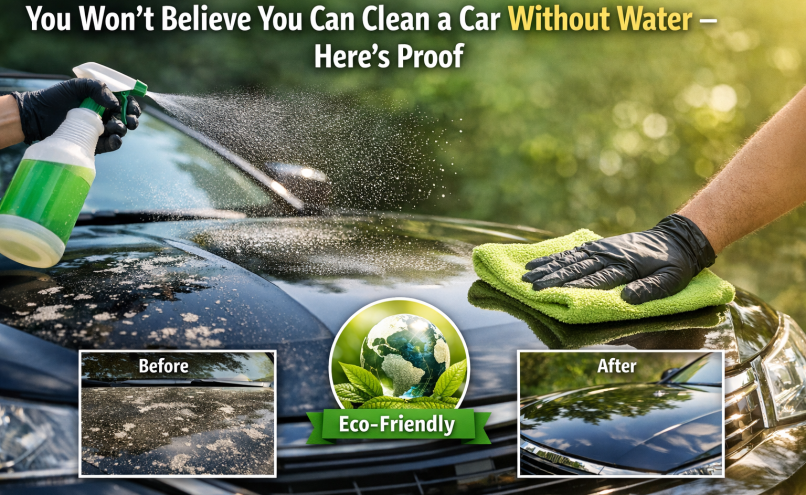
- Dust, bird droppings, and road grime are removed easily
- Surfaces look cleaner and shinier
- No streaks or water spots remain
Professional Adoption
Waterless cleaning is widely used by:
- Professional car detailers
- Eco-conscious service providers
- Urban car care businesses
This shift proves its reliability and effectiveness.
Visual Finish
Compared to traditional washing:
- Better gloss and shine
- No mineral residue
- Cleaner glass and paint surfaces
Environmental Benefits
Water Conservation
- Saves hundreds of liters per wash
- Ideal for water-scarce regions
Reduced Pollution
- No harmful runoff into drainage systems
- Eco-friendly formulas reduce chemical impact
Sustainable Living
Choosing waterless cleaning supports a greener lifestyle and reduces your carbon footprint.
Benefits Beyond Sustainability
Convenience
- No hoses, buckets, or setup
- Can be done anywhere
Time-Saving
- Quick and efficient process
Cost-Effective
- Minimal equipment required
- Long-lasting products
Enhanced Finish
Eco-friendly solutions often include polishing agents that:
- Improve shine
- Add surface protection
- Enhance paint longevity
Is It Safe for Your Car?
Yes — when using proper eco-friendly solutions and microfiber cloths, it is completely safe.
Best Practices
- Always use clean microfiber cloths
- Avoid wiping heavily muddy surfaces directly
- Use gentle motions
- Rotate cloth sides frequently
The combination of lubrication and microfiber ensures scratch-free cleaning.
Common Myths Debunked
Myth: It scratches paint
→ Microfiber cloths and lubricated sprays prevent this
Myth: It doesn’t clean well
→ Eco-friendly formulas effectively break down dirt
Myth: It’s just a trend
→ It’s becoming the future of car care
Step-by-Step Guide
- Spray eco-friendly solution on a section
- Let it sit for a few seconds
- Wipe gently with a microfiber cloth
- Buff with a second clean cloth
- Repeat across the vehicle
Why This Matters Today
With rising environmental concerns, switching to waterless cleaning:
- Conserves water
- Reduces pollution
- Promotes sustainability
It’s a small change with a big impact.
The Future of Car Care
Car cleaning is evolving toward:
- Water-saving technologies
- Eco-friendly solutions
- Smart, efficient methods
Waterless washing is leading this transformation.
Ready to Switch to Smarter Car Cleaning?
Stop wasting water and start using a smarter solution for your car. With Abaac , you get eco-friendly cleaning powered by advanced solutions and premium microfiber technology that protects your vehicle while delivering a spotless shine. Whether you need a quick clean or a full-service experience, we’ve got you covered. Explore our car cleaning services designed for convenience and sustainability, or check out our transparent pricing plans to find the perfect option for your needs. Make the switch today and experience the future of car care.
Frequently Asked Questions
1. Is waterless car washing safe for all types of cars?
Yes, waterless car washing is safe for all vehicles when using eco-friendly solutions and clean microfiber cloths. The key is proper technique—gentle wiping and using high-quality products ensure your car’s paint remains scratch-free and protected.
2. Can waterless washing remove heavy dirt or mud?
Waterless cleaning works best for light to moderate dirt, such as dust, bird droppings, and road grime. For heavily muddy vehicles, it’s recommended to do a quick pre-clean or rinse before using a waterless method.
3. Why are microfiber cloths important in waterless car cleaning?
Microfiber cloths are essential because they trap dirt particles safely within their fibers, reducing the risk of scratches. They also absorb residue effectively and help achieve a smooth, streak-free finish.
4. Are waterless car cleaning products really eco-friendly?
Most high-quality waterless solutions are biodegradable and non-toxic, making them safe for the environment. They also eliminate water waste and prevent harmful runoff, making them a truly sustainable choice.
5. How often should I use waterless car washing?
You can use waterless washing as often as needed, especially for regular maintenance. Many car owners use it weekly to keep their vehicle clean without the hassle of traditional washing.