

Water has become one of the most critical resources for urban housing societies. Across Indian cities, apartment complexes are struggling with limited municipal supply, declining groundwater levels, tanker dependency, and rising water costs. Managing daily consumption has become a key responsibility for Resident Welfare Associations (RWAs) and Managing Committees (MCs).
One simple but powerful solution often overlooked is how cars are washed inside housing societies.
This blog explains how waterless car wash helps housing societies save water, why it is ideal for apartment living, and how societies can adopt eco-friendly waterless car wash practices using microfiber cloths—without compromising on vehicle cleanliness or resident satisfaction.
Water Usage in Housing Societies: A Hidden Drain
In most apartment complexes, car washing happens:
- Daily or on alternate days
- Using hose pipes or buckets
- With potable water meant for household use
While each wash may seem insignificant, the collective impact is massive.
Typical Water Consumption from Car Washing
- Bucket wash per car: 30–40 litres
- Hose pipe wash per car: 150–300 litres
- 100-car society (daily wash): 3,000+ litres per day
- Annual wastage: 10–15 lakh litres
This highlights why understanding how housing societies can save water is no longer optional—it’s essential.
What Is a Waterless Car Wash?
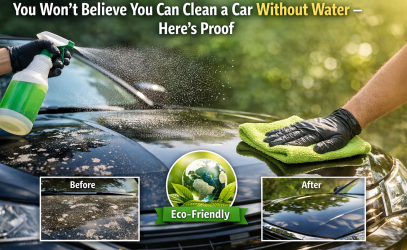
A waterless car wash is a modern vehicle cleaning method that uses specially designed cleaning solutions instead of water.
These solutions:
- Loosen and lift dust and dirt
- Encapsulate particles to avoid scratches
- Allow safe wiping using microfiber cloths
- Leave behind a clean, glossy finish
No hoses.
No buckets.
No water runoff.
This makes it perfectly suited for car wash without water in apartments, where water conservation and cleanliness are equally important.
Eco-Friendly Waterless Car Wash: Designed for Sustainable Living
An Abaac eco-friendly waterless car wash uses biodegradable, non-toxic, and low-chemical formulations that are safe for:
- Vehicle paint and surfaces
- Human handling
- Basement floors and surroundings
- The environment
Unlike conventional detergents, these solutions:
- Do not contaminate drains
- Do not pollute groundwater
- Do not leave harmful residues
For housing societies focused on sustainability, eco-friendly waterless washing aligns with responsible urban living and environmental stewardship.
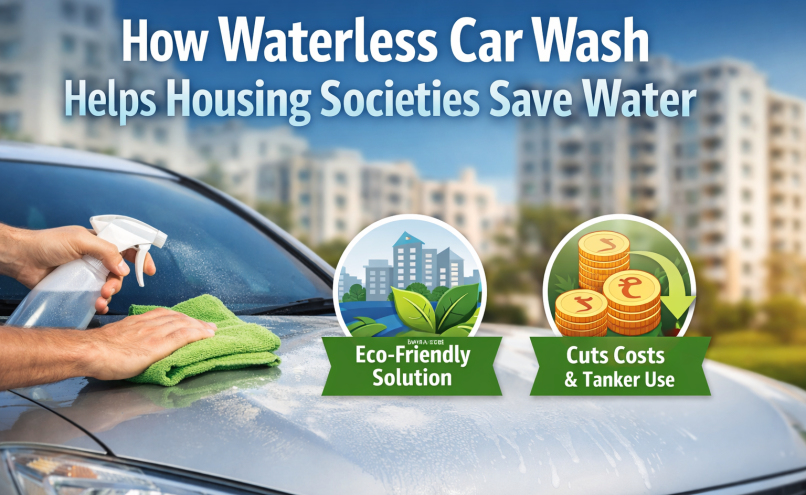
How Waterless Car Wash Helps Housing Societies Save Water
1. Zero Water Consumption for Car Cleaning
The most direct and impactful benefit is complete elimination of water usage for vehicle washing.
When a society adopts waterless car washing:
- Every vehicle cleaned saves 30–300 litres of water
- Monthly water savings run into tens of thousands of litres
- Annual savings easily cross 10 lakh litres
This is why water saving car wash for societies is gaining rapid adoption across urban residential communities.
2. Reduced Dependence on Water Tankers
Many societies rely on tanker water, especially during summer months. Tanker water is:
- Expensive
- Unpredictable
- Often of questionable quality
By eliminating water used for car washing:
- Tanker demand reduces
- Monthly water bills come down
- Emergency shortages become manageable
This directly improves financial and operational stability.
3. Ideal Solution for Apartment Parking Areas
Traditional car washing in basements leads to:
- Wet floors
- Mud accumulation
- Drain blockages
- Slippery surfaces
With Abaac car wash without water in apartments:
- Parking areas remain dry
- No runoff or puddles form
- No oil or detergent enters drains
- Basements stay cleaner and safer
This improves overall maintenance efficiency and safety for residents.
4. Scalable for Small and Large Housing Societies
Whether a society has:
- 20 cars or 200 cars
- Open parking or basement parking
Waterless car wash services scale easily without increasing water demand. This makes them suitable for:
- Standalone buildings
- Large gated communities
- High-rise apartment complexes
The Role of Microfiber Cloths in Waterless Car Wash
Microfiber cloths are a core component of effective waterless car washing.
Why Microfiber Cloths Are Essential
High-quality microfiber cloths:
- Trap dirt deep within their fibers
- Reduce friction on the paint surface
- Prevent swirl marks and scratches
- Absorb cleaning residue efficiently
Professional waterless car wash providers typically use:
- Multiple microfiber cloths per car
- Separate cloths for body, glass, wheels, and interiors
- Regularly cleaned and replaced cloths
This method ensures safe and consistent results across all vehicles in a housing society.
How Housing Societies Can Save Water by Switching to Waterless Car Wash
Step 1: Evaluate Current Water Usage
Societies should calculate:
- Number of vehicles
- Washing frequency
- Water used per wash
This helps quantify the actual water being wasted daily and monthly.
Step 2: Partner with a Professional Waterless Car Wash Service
Professional providers offer:
- Trained manpower
- Eco-friendly waterless products
- Standardized microfiber cloth usage
- Scheduled cleaning routines
This ensures quality, safety, and resident confidence.
Step 3: Implement Society-Level Guidelines
Managing Committees can:
- Restrict hose-pipe washing
- Promote waterless washing as the standard method
- Communicate benefits clearly to residents
Clear policies make adoption smoother and more effective.
Step 4: Educate Residents on Water Conservation
When residents understand:
- How much water is saved
- How it reduces tanker dependency
- How it supports sustainability
They are more likely to support and adopt waterless washing enthusiastically.
Cost Efficiency for Housing Societies
While traditional car washing appears inexpensive on the surface, it involves hidden costs such as:
- Tanker water expenses
- Drain cleaning
- Basement maintenance
- Increased water bills
Waterless car wash offers:
- Predictable service costs
- Reduced infrastructure strain
- Long-term savings at the society level
This makes it financially sensible for RWAs planning long-term water management.
Supporting Green and Sustainable Community Goals
Housing societies aiming for:
- Eco-friendly branding
- Green building practices
- Sustainability certifications
Can significantly strengthen their profile by adopting waterless car wash systems.
It demonstrates:
- Responsible water usage
- Environmental awareness
- Community-driven sustainability
Why Waterless Car Wash Fits Modern Apartment Living
Urban apartment living comes with:
- Limited water supply
- Shared resources
- Strict regulations
- High vehicle density
A water saving car wash for societies fits seamlessly into this lifestyle by offering:
- Convenience
- Cleanliness
- Compliance
- Conservation
It transforms a daily necessity into a sustainable practice.
The Larger Impact: Small Change, Big Results
When one housing society adopts waterless car washing:
- Thousands of litres of water are saved annually
- Pressure on city water infrastructure reduces
- Awareness spreads across neighborhoods
Collectively, such small shifts can create a meaningful impact on urban water conservation.
A Smart Water – Saving Choice for Housing Societies
Understanding how waterless car wash helps housing societies save water reveals that it is not just an alternative—but a necessity for modern urban living.
By adopting Abaac eco-friendly waterless car wash solutions and proper microfiber cloth cleaning methods, housing societies can:
- Save lakhs of litres of water every year
- Reduce tanker dependency
- Maintain clean, dry parking areas
- Promote sustainable community living
For communities searching for practical answers to how housing societies can save water, waterless car wash stands out as one of the simplest and most effective solutions available today.
FAQs
1. How much water can a housing society save with waterless car wash?
A medium-sized society can save 10–15 lakh litres of water annually, depending on vehicle count and washing frequency.
2. Is waterless car wash suitable for daily cleaning in apartments?
Yes. It is ideal for regular maintenance cleaning in apartment parking areas.
3. Are eco-friendly waterless car wash products safe?
Yes. They are biodegradable, non-toxic, and designed to be safe for vehicles, people, and the environment.
4. Why are microfiber cloths important in waterless car washing?
Microfiber cloths safely trap dirt, reduce friction, and protect car paint during cleaning.
5. Can large housing societies adopt waterless car wash easily?
Yes. Waterless car wash services are scalable and work efficiently for both small and large apartment communities.