

And How Abaac Is Helping Housing Societies Save Water—Effortlessly
Urban housing societies are at the center of India’s water crisis. From tanker shortages to rising maintenance costs, managing water responsibly is no longer optional—it’s essential.
Yet one daily activity continues to consume thousands of litres of fresh water every month: traditional car washing in apartments.
At Abaac, we work closely with housing societies to introduce a smarter alternative—waterless car wash powered by eco-friendly solutions and premium microfiber technology. Still, many residents and RWAs hesitate because of common myths surrounding waterless cleaning.
This page clears those myths—using only positive, factual insights—and explains how Abaac’s waterless car wash helps housing societies save water, improve cleanliness, and embrace sustainable living without compromise.
Why Abaac Focuses on Waterless Car Wash for Housing Societies
In a typical apartment complex:
- One car wash uses 100–150 litres of water
- 100 cars = 10,000+ litres per wash cycle
- Weekly washing = massive monthly water loss
This is why Abaac has built its solution specifically around:
- Car wash without water in apartments
- Water saving car wash for societies
- Zero runoff, zero wastage, zero inconvenience
Waterless car wash is not an add-on service at Abaac—it’s a core sustainability solution.
Myth 1: Waterless Car Wash Is Not “Proper” Cleaning
Many people associate visible water with effective cleaning.
Abaac’s Reality
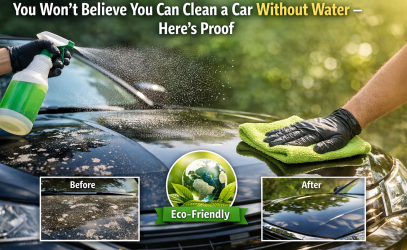
Abaac’s waterless car wash uses advanced eco-friendly formulations that:
- Loosen and lift dirt from the surface
- Encapsulate dust safely
- Enhance shine without rinsing
Cleaning effectiveness comes from chemistry + technique, not water volume. Abaac delivers a clean you can see—and trust.
Myth 2: It Won’t Make a Real Difference in Water Saving
Some residents feel individual car washes don’t impact overall water usage.
Abaac’s Reality
When implemented at a society level, waterless car wash creates measurable water conservation.
With Abaac, housing societies:
- Save thousands of litres of water every month
- Reduce tanker dependency
- Improve long-term water management
This is exactly how waterless car wash helps housing societies save water—consistently and visibly.
Myth 3: Microfiber Is Just Another Cloth
Microfiber is often misunderstood as a regular cleaning fabric.
Abaac’s Reality
Abaac uses high-grade microfiber cloths, designed for waterless cleaning:
- Ultra-fine fibers trap dirt particles safely
- High absorbency removes residue efficiently
- Gentle texture protects paint and surfaces
Microfiber is the backbone of safe, effective car wash without water in apartments—and Abaac never compromises on quality.
Myth 4: Waterless Car Wash Isn’t Ideal for Apartment Parking Areas
Some worry about practicality inside residential complexes.
Abaac’s Reality
Abaac’s waterless car wash services is made for apartment living:
- No water overflow
- No wet parking floors
- No drainage issues
- No noise or disturbance
That’s why RWAs increasingly choose Abaac as a water saving car wash for societies—cleaner parking, happier residents.
Myth 5: Waterless Car Wash Is Only for Environmentally Conscious Residents
Sustainability is sometimes seen as a “nice to have.”
Abaac’s Reality
Abaac’s solution benefits everyone:
- Residents enjoy clean cars without inconvenience
- Societies reduce water bills and maintenance
- RWAs demonstrate responsible management
- Communities build a future-ready reputation
Waterless car wash is not a niche idea—it’s a practical upgrade for modern societies.
How Abaac Helps Housing Societies Save Water—Every Day
Abaac’s waterless car wash model is designed specifically for scale.
By partnering with Abaac, housing societies can:
- Eliminate water usage for routine car cleaning
- Reduce tanker frequency
- Support sustainability goals
- Improve overall parking hygiene
- Adopt an eco-friendly solution without disruption
For societies asking how housing societies can save water, Abaac offers one of the fastest and most effective answers.
The Abaac Advantage: Eco-Friendly + Microfiber-Driven
Abaac combines:
- Biodegradable, eco-friendly cleaning solutions
- Premium microfiber cloth systems
- Trained professionals following safe processes
- Apartment-friendly execution
This ensures:
- Zero water wastage
- Consistent results
- Surface-safe cleaning
- Sustainable daily maintenance
It’s not just about cleaning cars—it’s about changing how societies use water.
Why RWAs Choose Abaac for Waterless Car Wash
RWAs today look for solutions that are:
- Easy to implement
- Accepted by residents
- Cost-effective at scale
- Environmentally responsible
Abaac meets all four—making it a preferred water saving car wash for societies across urban India.
Make Your Society Water-Smart with Abaac’s Waterless Car Wash
Water conservation starts with everyday choices—and car washing is one of the easiest places for housing societies to make a meaningful impact. Abaac’s waterless car wash offers a simple, eco-friendly solution that keeps cars clean while saving thousands of litres of water every month. Powered by advanced cleaning formulas and premium microfiber technology, Abaac is designed specifically for apartment living—no water, no mess, no disruption. If your society is looking for a smarter way to reduce water usage, lower maintenance stress, and adopt sustainable practices, Abaac is ready to help.
Frequently Asked Questions
How does Abaac’s waterless car wash save water?
Abaac eliminates the need for fresh water during routine car washing, saving thousands of litres monthly at the society level.
Is Abaac suitable for apartment complexes?
Yes. Abaac is designed specifically for car wash without water in apartments, with no runoff or mess.
Why does Abaac use microfiber cloths?
Microfiber safely traps dirt, enhances cleaning efficiency, and protects car surfaces during waterless cleaning.
Can Abaac be implemented for all society vehicles?
Yes. Abaac works at scale and is ideal for full-society adoption.
Is Abaac an eco-friendly car wash solution?
Absolutely. Abaac focuses on water conservation, biodegradable products, and sustainable practices.