

Urban living offers convenience, security, and structured parking—but it also brings limitations. One of the most common concerns among apartment residents and property managers is vehicle maintenance in enclosed spaces. Traditional car washing methods that require hoses, buckets, and drainage systems simply don’t work well in basement garages.
That’s why understanding Why Waterless Car Wash Is Ideal for Basement & Parking-Area Cleaning has become increasingly important. With rising water restrictions, stricter building policies, and growing environmental awareness, waterless car washing has emerged as the most practical and ecofriendly solution for modern parking spaces.
In this guide, we’ll explore:
- Why traditional car washing fails in basement parking
- Whether car washing is allowed in basement parking
- How car wash in basement parking without water solves compliance issues
- The benefits of no water car wash for parking area
- Why ecofriendly solutions and microfiber cloths make all the difference
The Challenge of Washing Cars in Basement Parking
Basement parking areas are designed for vehicle storage—not cleaning operations. Most underground garages lack:
- Proper drainage infrastructure
- Oil-water separators
- Wash bays
- Wastewater management systems
When someone attempts to wash a car using water in a basement slot, it creates several problems:
- Water pooling across concrete floors
- Slippery surfaces that increase accident risk
- Soap and oil entering shared drainage systems
- Structural seepage concerns
- Disputes between residents
Because of these risks, many residential societies restrict traditional water-based car washing.
Is Car Washing Allowed in Basement Parking?
One of the most searched questions is: is car washing allowed in basement parking?
The Reality: Usually Not with Water
Most housing societies prohibit hose-based washing because:
- It wastes potable water
- It overloads drainage systems
- It increases maintenance costs
- It creates safety hazards
- It may violate municipal water usage regulations
However, waterless car washing is often permitted because:
- It generates no wastewater
- It does not require plumbing
- It prevents floor flooding
- It aligns with water conservation goals
This makes waterless cleaning a legally safer and building-compliant option.
What Is a Waterless Car Wash?
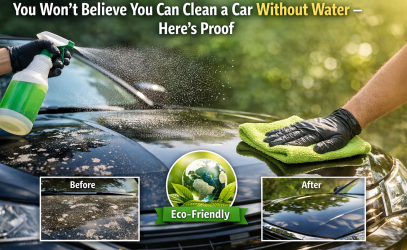
Abaac waterless car wash uses specially eco friendly formulated solutions that lift and encapsulate dirt without the need for rinsing. The process involves:
- Spraying the solution on a vehicle panel
- Allowing it to loosen and surround dirt particles
- Gently wiping with high-quality microfiber cloths
- Buffing to enhance shine
Unlike traditional methods, it does not require a hose, bucket, or drainage system.
This is why it’s ideal for car wash in basement parking without water.
Why Waterless Car Wash Is Ideal for Basement & Parking-Area Cleaning
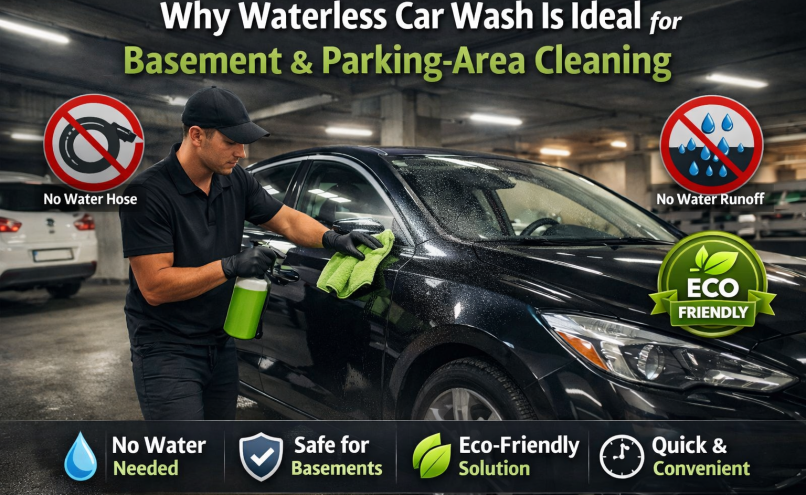
1. No Water Runoff
Traditional washing uses 100–150 liters of water per vehicle. In enclosed parking garages, that water has nowhere to go.
A no water car wash for parking area:
- Uses minimal liquid
- Produces zero runoff
- Keeps the floor dry
- Prevents drainage contamination
For property managers, this dramatically reduces liability risks.
2. An Ecofriendly Solution for Modern Cities
Water scarcity is becoming a serious concern in urban areas. Using drinking water to wash cars is increasingly discouraged.
Abaac Waterless car washing is an ecofriendly solution because it:
- Saves up to 150 liters of water per wash
- Reduces wastewater pollution
- Minimizes chemical discharge
- Supports sustainable living practices
Companies like Abaac promote responsible car care solutions designed specifically for apartment and basement environments, aligning vehicle maintenance with environmental responsibility.
3. Safe for Basement Infrastructure
Water seepage can weaken concrete surfaces and damage underground structures over time. Basement garages are especially vulnerable because moisture remains trapped.
Since Abaac waterless washing keeps surfaces dry, it helps:
- Prevent long-term structural damage
- Reduce mold and dampness risks
- Avoid slippery floors
- Maintain parking area cleanliness
This makes it ideal for enclosed and underground parking zones.
4. Complies with Society Rules
If you’ve ever asked, “is car washing allowed in basement parking?”, you’ve probably encountered restrictions.
Abaac Waterless washing service complies with most society guidelines because:
- It doesn’t use common water supply
- It doesn’t block drainage systems
- It doesn’t create puddles
- It respects shared spaces
This reduces resident complaints and management disputes.
5. Minimal Space Required
Basement parking slots are narrow and closely arranged. Hose washing can disturb neighboring vehicles and create inconvenience.
Abaac Waterless cleaning:
- Works within a single parking slot
- Requires no additional setup
- Causes no splashing
- Keeps surrounding cars clean
This makes it highly practical for apartment residents.
6. Faster & More Convenient
Traditional washing includes:
- Setup time
- Rinsing
- Scrubbing
- Drying
Waterless washing simplifies the process:
- Spray
- Wipe
- Buff
It can typically be completed in 20–30 minutes without creating mess.
For busy professionals living in apartments, this is a major advantage.
The Role of Microfiber Cloths in Waterless Washing
Microfiber cloths are essential to safe waterless cleaning.
They are designed to:
- Trap dirt particles within fibers
- Prevent scratches and swirl marks
- Absorb cleaning solution effectively
- Provide streak-free finishing
Using high-quality microfiber cloths ensures that dirt is lifted safely rather than dragged across the paint surface.
Best practices include:
- Using multiple clean cloths
- Folding cloth into sections
- Switching sides frequently
- Avoiding excessive pressure
Without microfiber technology, waterless washing would not be as safe or effective.
Benefits for Property Managers & Housing Societies
For residential associations and commercial parking operators, waterless car washing offers:
- Lower infrastructure investment
- Reduced maintenance costs
- No need for drainage upgrades
- Improved compliance with sustainability policies
- Fewer resident conflicts
By encouraging ecofriendly solution providers like Abaac, property managers can maintain cleanliness standards without increasing operational risks.
Why No Water Car Wash for Parking Area Is the Future
Urban spaces are becoming more compact. Regulations around water use are tightening. Environmental awareness is growing.
A no water car wash for parking area offers:
- Practicality
- Sustainability
- Compliance
- Cost-efficiency
- Safety
It is specifically suited for:
- Apartment complexes
- Basement garages
- Covered parking structures
- Commercial office parking
As cities modernize, vehicle maintenance methods must evolve too.
Make the Smart Switch to Waterless Car Care Today
When evaluating Why Waterless Car Wash Is Ideal for Basement & Parking-Area Cleaning, the advantages are undeniable:
- No water runoff
- No structural damage
- No rule violations
- No slippery floors
- Significant water savings
- Environmentally responsible
For apartment residents asking “is car washing allowed in basement parking?”, the safest and most practical solution is clear.
Choosing a professional, ecofriendly solution like Abaac ensures your vehicle stays clean while respecting building rules, conserving water, and maintaining safe parking environments.
Waterless car washing isn’t just a convenient alternative.
It’s the smarter, sustainable future of urban car care.
Frequently Asked Questions
Is car washing allowed in basement parking?
Most societies prohibit water-based washing due to drainage and water wastage issues. Waterless car washing is generally allowed because it produces no runoff.
Can I do car wash in basement parking without water?
Yes. Waterless car wash solutions are specifically designed for such environments and are safe when used with microfiber cloths.
Is no water car wash for parking area environmentally friendly?
Yes. It saves significant amounts of water and reduces chemical runoff, making it an ecofriendly solution.
Will waterless washing scratch the car?
Not if done properly using high-quality microfiber cloths and correct wiping techniques.